
Polyacrylamide’s Crucial Role in Enhanced Oil Recovery and Mining.
While polyacrylamide is best recognized for cleaning water, it is equally critical in extracting the raw materials that power global industry. In both oil fields and deep-earth mining operations, PAM’s unique rheological and structural traits make it indispensable for maximizing extraction yields and managing heavy environmental waste streams.
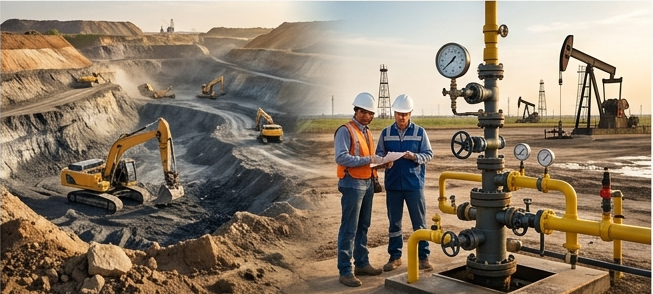
Enhanced Oil Recovery (EOR): Modifying Flow Viscosity
Primary and secondary oil recovery methods (like natural pressure and water flooding) often leave up to 60-70% of a reservoir’s oil trapped in porous rock. This is where polymer flooding, utilizing partially hydrolyzed polyacrylamide (HPAM), steps in. By adding high-molecular-weight HPAM to injection water, engineers increase its viscosity, matching it closer to the viscosity of the subterranean crude oil. This prevents water from taking paths of least resistance (fingering) through the reservoir, creating a uniform sweep front that forces trapped oil toward production wells.
Mining and Mineral Processing: Accelerating Sedimentation
In the mining industry, massive volumes of water are utilized to wash, crush, and separate valuable minerals (such as copper, gold, iron ore, and coal) from base rock. This generates dense tailing slurries that must be processed rapidly to recycle water and secure environmental compliance. Anionic polyacrylamide is injected into massive thickeners, where it rapidly binds mineral particles into dense aggregates, accelerating sedimentation rates by up to several hundred percent. This ensures immediate water reclamation back into the milling circuit.